

Translife Crossdressing Knowledge Centre
Choosing the Correct Bra for Breast Forms
Learn how band size, cup size, breast form dimensions and bra construction work together so you can create a secure, comfortable and beautifully balanced feminine silhouette.
Explore the GuideWhy Bra Fit Changes With Breast Forms
Adding Breast Forms Changes the Way a Bra Needs to Fit
A bra is designed to support and shape breast volume. When breast forms provide that volume, the bra still has to anchor securely to your body, contain the forms correctly and position them in a way that creates the silhouette you want.
That means the correct bra is not chosen by cup size alone. Band fit, cup width, cup depth, coverage, strap adjustment and the shape of the breast forms all work together.
The Basic Principle
Your Body Provides the Foundation — the Breast Forms Provide the Volume
The bra has to connect those two things successfully. If the band is unstable, the cups are the wrong shape or the forms do not sit naturally inside them, the finished bust can look or feel wrong even when the labelled bra size appears correct.
The Three-Part Fit
Body + Breast Forms + Bra
Think of the fit as a system rather than three separate purchases. Each part changes how the other two behave.
Your Body
Your ribcage and chest determine the band size and the physical space available for the breast forms.
- Chest width
- Ribcage measurement
- Natural chest contour
- Shoulder and torso proportions
Your Breast Forms
The forms determine how much space the bra cups must contain and how that volume is distributed.
- Width
- Height
- Projection
- Overall shape
Your Bra
The bra anchors the bust, supports the forms and controls their final height, separation and profile.
- Band stability
- Cup width and depth
- Coverage
- Strap support
Why the Fitting Process Is Different
Traditional Bra-Fitting Advice Assumes the Breast Volume Is Part of the Body
Conventional bra fitting normally starts with the wearer's natural breast tissue. With breast forms, the volume is separate and can be moved, repositioned or changed completely.
That creates more flexibility, but it also means you need to think about the relationship between the breast form and the cup itself. A bra may technically fasten around your body while still being unsuitable for the particular forms you want to wear.
Start With the Foundation
The Band Still Does Most of the Anchoring
Breast forms add weight and volume to the front of the bra, so a stable band becomes especially important. If the band rides up or moves around the torso, the cups and breast forms move with it.
A secure band should sit level around the body and feel firm without being painfully tight. The next section of this guide explains band sizing in detail.
Cup Size Is Only Part of the Story
Two Bras With the Same Size Label Can Fit the Same Breast Forms Very Differently
Cup Width
A wider cup can accommodate a broader breast-form footprint, while a narrow cup may squeeze the form or push it towards the centre.
Cup Depth
More projected breast forms need enough depth in the cup to avoid excessive compression or distortion.
Cup Height
Taller forms may benefit from greater cup coverage, while shorter forms can work well in lower-cut styles.
Cup Construction
Moulded, stretch, lined and structured cups all hold and shape breast forms differently.
Same Breast Forms — Different Result
The Bra Can Change the Finished Silhouette
A more structured bra may hold the forms higher and create a defined outline. A softer bra may allow a gentler shape. Greater cup coverage can contain more of the form, while a lower-cut style can reveal more upper fullness.
None of these effects is automatically better. The aim is to understand what the bra is doing so you can choose the result you prefer.
Less rigid cup structure can allow a gentler, less sculpted outline.
Structured cups can create a firmer and more controlled bust shape.
What Good Fit Should Feel Like
The Bra Should Support the Forms Without Fighting Them
- The band stays level and secure.
- The forms sit fully inside the cups.
- The cups are not visibly collapsing or stretching.
- The forms stay in position as you move.
- The finished bust looks balanced under clothing.
- The band rides upwards at the back.
- The breast forms spill beyond the cups.
- There is substantial empty cup space.
- The forms are being flattened or distorted.
- The bust moves excessively when you walk or turn.
The Key Point
Choose the Bra for the Complete Combination
When you are choosing a bra for breast forms, start with your body, then consider the physical dimensions of the forms and finally the way the bra holds them. A successful fit is the result of all three working together.
Understanding Band Size
The Bra Band Is the Foundation of a Secure Fit
When you wear breast forms, the band does much more than simply keep the bra fastened. It anchors the cups to your body, helps hold the breast forms in position and provides the stable base from which the rest of the bra can work.
A band that is too loose can allow the whole bra to move, while one that is unnecessarily tight can feel uncomfortable and distort the cups. The aim is firm, level and secure.
The Band Principle
Support Starts Around the Ribcage — Not at the Shoulder Straps
The shoulder straps help position the cups, but they should not be expected to carry the whole load. A secure bra starts with a band that sits correctly around your torso and remains stable as you move.
What Band Size Actually Means
The Number Relates to the Size of the Bra Around Your Torso
In UK bra sizing, the band is the numerical part of the size — for example 36, 38, 40 or 42. It provides the starting point for fitting the bra to your ribcage.
Band Size
The number identifies the approximate band category used by the manufacturer.
Cup Size
The letter describes cup volume relative to that particular band size.
Complete Bra Size
The band number and cup letter must be considered together rather than as independent measurements.
Where the Band Should Sit
Aim for a Level Line Around the Body
When the bra is fastened, the band should run horizontally around your torso rather than climbing upwards towards the shoulder blades.
If the back of the band rises significantly higher than the front, it is often a sign that the band is too loose or that the shoulder straps have been tightened too much in an attempt to compensate.
How Firm Should the Band Feel?
Secure Does Not Mean Painfully Tight
A correctly fitted band should feel noticeably firm because it needs to resist movement, especially once breast forms add weight to the cups. Firmness is useful; discomfort, digging or restricted breathing is not.
Too Loose
The band moves easily, rides upwards or allows the cups and breast forms to shift around your body.
Firm and Secure
The band stays level, feels supportive and remains comfortable while you sit, walk and move.
Too Tight
The band digs excessively, becomes uncomfortable or pulls the cups out of their natural position.
Start With Adjustment Available
A New Bra Should Usually Fit Securely Without Using All of Its Tightening Range
Bra bands gradually relax with wear. Starting with some adjustment still available gives you room to tighten the bra later as the elastic softens.
Do not use the hook position as an absolute rule, however. Different bras and fabrics stretch differently, so comfort and stability remain the real test.
Why Breast Forms Make This More Important
Extra Weight at the Front Can Expose a Poor Band Fit Very Quickly
Added Weight
Breast forms add weight to the front of the bra, making a loose band more likely to move.
More Movement
If the band shifts around the ribcage, the forms can move sideways or change height.
Strap Over-Tightening
A loose band can encourage you to tighten the straps too much in an attempt to create support.
Cup Instability
When the band moves, even a well-matched cup can stop holding the form where you intended.
Band and Cup Size Are Connected
Changing the Band Size Also Changes the Cup Relationship
A cup letter does not represent one fixed volume across every band size. For example, a C cup on one band size is not identical in volume to a C cup on every other band size.
This is why selecting a band first and then checking the cup is more useful than choosing a cup letter in isolation.
Quick Band Fit Check
Before You Judge the Cups, Check These Five Things
-
01
Fasten the bra securely.
Make sure the band feels firm enough to stay in place without becoming uncomfortable.
-
02
Look at the back.
The band should remain approximately level rather than rising towards the shoulder blades.
-
03
Move your upper body.
Sit, stand, turn and raise your arms to see whether the band remains stable.
-
04
Check the straps.
They should help position the cups rather than being tightened excessively to hold the bra up.
-
05
Then assess the cups.
Only once the band is stable can you accurately judge cup size and breast-form compatibility.
Remember
Get the Foundation Right Before You Adjust the Bust
A stable band makes everything else easier to judge. Once the bra is sitting securely around your ribcage, you can move on to cup size, breast-form dimensions and the final fit with far greater confidence.
Understanding Cup Size With Breast Forms
Cup Size Is About the Space Your Breast Forms Need
When breast forms create your bust volume, the cup has a very practical job: it must provide enough width, depth and coverage to hold the forms comfortably without leaving excessive empty space or compressing them into the wrong shape.
The cup letter on the label is therefore a useful starting point, but it is not the complete answer. The physical dimensions of your breast forms and the construction of the bra matter just as much.
The Cup-Size Principle
A Cup Letter Does Not Describe One Universal Breast Size
Cup volume is related to band size. A C cup on one band size is not the same volume as a C cup on every other band. This is why the complete bra size — band and cup together — must be considered when fitting breast forms.
Band and Cup Work Together
Read the Bra Size as a Combination
The number tells you the band category and the letter tells you the cup category relative to that band. Separating the two can make bra sizing appear much simpler than it really is.
36C
A C-cup volume built around a 36 band.
40C
Still labelled C, but designed around a larger band and therefore a different cup volume.
Breast Forms Change the Fitting Process
You Are Matching a Physical Form to a Three-Dimensional Cup
With natural breast tissue, the breast can adapt to some extent to the shape of a bra. A breast form is different. Its width, height, projection and overall profile are already established.
The cup therefore needs to accommodate the form rather than forcing it into a space that is fundamentally the wrong shape. This is one reason two bras with identical size labels can produce very different results with the same breast forms.
Look Beyond the Cup Letter
Four Things Determine Whether the Form Actually Fits the Cup
When assessing a bra for breast forms, think about the physical space inside the cup rather than concentrating only on the size printed on the label.
Cup Width
The cup needs enough horizontal space for the breast form's footprint. A cup that is too narrow may squeeze the form or force it towards the centre.
Cup Depth
More projected forms need sufficient space towards the front of the cup. Too little depth can flatten or distort the form.
Cup Height
Taller breast forms may need greater cup coverage to contain them securely and produce a smooth transition.
Cup Shape
Cups can be shallow, projected, rounded, moulded or more flexible. The shape needs to complement the breast form, not merely match its nominal size.
Reading the Fit
What the Breast Form Is Telling You About the Cup
Cup Too Small
The form may be compressed, pushed upwards or sideways, or visibly extend beyond the cup.
- Form spilling beyond cup edges
- Excessive compression
- Cup pulled away from its intended shape
- Bust appears unusually high or crowded
Cup Working Well
The form sits naturally within the cup without being excessively compressed or surrounded by obvious empty space.
- Form contained securely
- Cup retains its intended shape
- Smooth outline under clothing
- Comfortable, stable presentation
Cup Too Large
There may be more cup volume than the form can fill, leaving visible space or reducing stability.
- Gaping around cup edges
- Wrinkling in soft cups
- Form moving within the cup
- Unfilled upper cup area
Size Can Be Right While Shape Is Wrong
Empty Space Does Not Automatically Mean You Need a Smaller Cup
Suppose the lower part of the cup is filled but the upper section gaps. That can indicate a mismatch between the shape of the breast form and the shape or coverage of the bra rather than simply too much cup volume.
Equally, a form can feel tightly compressed at the front while there is unused space elsewhere in the cup. Moving immediately to a larger or smaller cup may simply exchange one fitting problem for another.
Diagnose the Pattern
Cup Construction Changes the Result
The Same Breast Forms Can Behave Differently in Different Bras
Moulded or Structured Cups
These cups already have a defined shape. The breast form needs to fit that shape reasonably well because the cup itself has limited ability to adapt.
Soft or Flexible Cups
Softer fabric can adapt more readily to the breast form, although the finished shape may depend more heavily on the form itself.
A Common Mistake
Do Not Choose the Breast Forms and Bra From a Cup Letter Alone
Breast-form manufacturers may use cup-size guidance to help describe the approximate result of a particular form, but real bra fit varies with your band size, body proportions, the form's dimensions and the construction of the bra.
Treat a suggested cup size as guidance. The finished fit on your body is what matters.
Think About the Finished Silhouette
The Largest Cup You Can Fill Is Not Necessarily the Best Choice
Choosing a bra and breast forms is partly technical and partly visual. Your chest width, shoulders, waist, hips, clothing and personal preference all affect how the finished bust appears.
A smaller, well-proportioned bust can look more convincing than a larger one chosen simply because a particular cup letter sounds desirable. Equally, you may deliberately prefer a fuller silhouette. The important point is that the choice is intentional.
Quick Cup Fit Check
Five Questions to Ask Once the Breast Forms Are in the Bra
-
01
Is the whole breast form contained by the cup?
Look around the sides, lower edge and upper cup rather than judging only the front view.
-
02
Is the form being compressed?
Some support is useful, but the cup should not force the breast form into an obviously distorted shape.
-
03
Is there substantial unused space?
Check whether gaping is widespread or limited to one part of the cup, because the causes may be different.
-
04
Does the cup hold the form where you want it?
The breast form should remain stable at a natural height and separation as you move.
-
05
Do you like the result under clothing?
The final silhouette is more important than achieving a particular letter on the bra label.
The Key Point
Use Cup Size as a Starting Point — Then Fit the Actual Breast Forms
The correct cup is the one that accommodates the width, height, projection and volume of your breast forms while creating the silhouette you want. The letter on the label helps narrow the search; the finished fit determines whether the bra is actually right.
Measuring Yourself for a Bra
Measure Your Body First — Then Fit the Breast Forms
A useful bra fitting starts with your ribcage, not with the cup letter you hope to wear. The band must fit your body securely, while the cups must then provide the right space for the breast forms you intend to use.
Measurements give you a starting size to try. They do not replace the final fitting process, because different manufacturers, fabrics and bra styles can fit differently even when the label shows the same size.
The Best Order
Measure the Ribcage → Establish the Band → Add the Breast Forms → Assess the Cups
This keeps the fitting process logical. The band belongs to your body. The cup must then work with the size and shape of the breast forms while the bra is securely anchored.
Before You Measure
Keep the Process Simple and Consistent
You do not need specialist equipment. A soft dressmaking tape measure and a mirror are usually enough.
Use a Soft Tape
A flexible dressmaking tape follows the body more accurately than a rigid ruler or builder's tape.
Measure Close to the Body
For the underbust measurement, measure over bare skin or a thin, close-fitting layer rather than bulky clothing.
Keep the Tape Level
Use a mirror where possible to make sure the tape is horizontal around your torso rather than sloping.
Measure More Than Once
Repeat the measurement. If the results differ, check the tape position and measure again before choosing a size.
Step 1
Measure Around Your Ribcage Directly Beneath the Bust Line
Place the tape around your torso at the point where the bottom band of the bra will sit. Keep it level from front to back and hold it firmly against the body without pulling it painfully tight.
This underbust measurement is the most useful starting point for establishing your band size.
Turning the Measurement Into a Starting Size
Use the Measurement as Guidance — Not an Automatic Formula
Traditional bra-sizing methods sometimes add several inches to the ribcage measurement. Modern bras, stretch fabrics and manufacturer sizing vary enough that a rigid formula can be misleading.
A better approach is to use your actual underbust measurement to identify a sensible band-size range, then judge the bra by how securely and comfortably it fits on your body.
Example
The actual bra may still need to move up or down a band size depending on stretch, construction and comfort.
Step 2
Test the Band on Your Body Before Worrying About the Cup
Fasten the bra and check whether the band stays level around your torso. It should feel firm and supportive without becoming painful or restrictive.
If the band moves excessively or rides upwards, try a smaller band. If it is uncomfortably tight even before the cups are assessed, try the next band size up.
Level, firm and stable around the torso.
Riding up, sliding around or causing excessive pressure.
Step 3
Add the Breast Forms and Assess the Actual Cup Space
Once the band is stable, place the breast forms into the cups in the position you intend to wear them. Now the fitting process becomes less about calculation and more about how the physical form and cup work together.
Check Width
Does the form fit within the cup from side to side without being forced inward or extending well beyond the cup?
Check Projection
Is there enough forward depth for the form without excessive flattening or compression?
Check Height
Does the upper part of the form sit naturally within the cup rather than protruding or leaving major empty space?
Check Shape
Does the cup follow the form's profile, or are the two shapes clearly fighting each other?
What About Measuring Around the Bust?
It Can Be Useful — But Treat It as Supporting Information
Once your breast forms are positioned, you can measure around the fullest part of the finished bust. This can help you compare your underbust and bust measurements or follow a particular manufacturer's sizing chart.
However, the result does not tell you whether a cup is too narrow, too shallow, too tall or simply the wrong shape. With breast forms, those physical fit details remain essential.
Why Your Size Can Change Between Bras
The Tape Measure Gives You a Starting Point — the Bra Decides the Final Fit
Band Stretch
Some bands are much firmer than others, even in the same labelled size.
Cup Construction
Moulded, stretch, lined and seamed cups can all create different usable space.
Brand Sizing
Manufacturers do not all grade bras in exactly the same way.
Bra Style
A full-cup bra can fit the same breast form differently from a plunge or balconette style.
When the Band Changes
Remember That Cup Volume Changes With It
If you move to a different band size, keeping the same cup letter will also change the cup volume. This is why simply changing from, for example, a 38C to a 40C is not only a change to the band.
Sometimes a nearby size with a different band and cup combination can offer a similar cup volume while changing the fit around the torso. This is commonly referred to as sister sizing.
Simple Principle
Sister sizing is a fitting tool, not a guarantee. Always assess the real bra with your breast forms in place.
Common Measuring Errors
Small Measurement Mistakes Can Send You Towards the Wrong Band
Measuring Too Loosely
A tape hanging away from the body can suggest a band that is larger than you actually need.
Pulling the Tape Too Tight
Compressing the torso can create an unrealistically small measurement and an uncomfortable starting size.
Letting the Tape Slope
A tape that is lower at the front or back can alter the measurement enough to affect the starting band.
Treating One Number as Absolute
Your measurement narrows the search. It does not make every bra with that number fit identically.
A Practical Fitting Sequence
Use This Order When Trying a New Bra
-
01
Measure your underbust.
Establish a sensible band-size starting point.
-
02
Check the band fit.
Make sure the bra is level, firm and stable.
-
03
Add the breast forms.
Position them as you intend to wear them.
-
04
Assess the cup space.
Check width, depth, height, coverage and shape.
-
05
Adjust the straps last.
Use them to refine cup position rather than to compensate for a loose band.
-
06
Get fully dressed.
Judge the bra and breast forms by the silhouette they create under the clothing you actually intend to wear.
The Key Point
Measure for the Band — Fit the Cups With the Breast Forms
Your ribcage measurement gives you a practical starting point for choosing the bra band. The breast forms then determine whether the cups provide the right width, depth, height and shape. The correct bra is the one in which both parts work together comfortably and securely.
Matching Breast Forms to Bra Cups
The Bra Cup Has to Fit the Breast Form — Not Just the Size Label
Once you have established a secure band size, the next step is matching the physical dimensions of your breast forms to the space inside the bra cups.
Whether you choose a conventional bra or a specialist pocket bra, the principle is the same. The breast form needs enough width, height, depth and overall space to sit naturally without being crushed, distorted or left moving around inside an oversized cup.
The Core Fitting Principle
Fit the Actual Breast Form — Not the Cup Letter You Expected
A suggested cup size can help narrow your search, but the breast form itself is a three-dimensional object. Its width, height, projection, volume and shape determine how well it works with a particular bra cup.
Two Ways to Wear Breast Forms
Conventional Bra or Specialist Pocket Bra?
Both can work successfully. The important difference is how the breast form is retained once it has been positioned inside the cup.
Fitting Route 1
Conventional Bra
The breast form sits directly inside the cup. A well-fitting band and suitably shaped cup can hold the form effectively, particularly when the cup provides enough coverage and containment.
Fitting Route 2
Specialist Pocket Bra
A pocket bra adds an internal fabric layer or pocket designed to contain the breast form. The form sits between the layers rather than simply resting loose against the inside of the cup.
An Important Distinction
A Pocket Improves Containment — It Does Not Replace Correct Fit
A specialist pocket bra can hold a silicone breast form more securely, but the form still needs to be compatible with the available cup space. Putting an oversized, excessively wide or highly projected form into an unsuitable cup does not become a correct fit simply because the bra contains a pocket.
Match the Dimensions
Four Characteristics Matter More Than the Cup Letter Alone
Breast forms with similar overall volume can distribute that volume very differently. Look at the physical form and the three-dimensional space available inside the bra.
Width
The footprint of the breast form should sit comfortably within the usable width of the cup rather than being squeezed at the sides.
Height
Taller forms generally need sufficient vertical cup coverage. A lower cup can expose more of the form or provide less containment.
Projection
A more projected form needs adequate depth towards the front of the cup. A shallow cup can flatten the form or push it out of position.
Shape & Volume
Oval, triangular, semi-round and asymmetrical forms distribute their volume differently, so similar nominal sizes can behave differently inside the same bra.
Shape Matters
A Breast Form Can Have Enough Cup Volume and Still Be the Wrong Shape for the Bra
Imagine two breast forms containing a similar amount of material. One may spread that volume across a broad chest footprint while another projects more strongly forwards. They may therefore need different cup shapes even if both are described using a similar approximate cup size.
This is why increasing or decreasing the cup letter is not always the correct answer to a fitting problem.
Cup Width
Let the Breast Form Sit Inside the Cup Rather Than Fight Its Side Walls
If the cup is too narrow for the form, the form may be compressed, pushed towards the centre or encouraged to rotate. This can happen even when the overall cup volume appears reasonably close.
At the opposite extreme, a very wide cup around a narrower form can leave unused space and reduce the control the bra has over the form.
Form compressed by the available cup width.
Form sits comfortably within the cup footprint.
Excess space can reduce containment and stability.
Cup Depth & Projection
More Forward Projection Requires More Space at the Front of the Cup
When a breast form projects strongly forwards, a shallow cup may appear to be the correct width but still compress the front of the form or push the bra away from the body.
Cup Too Shallow
The breast form is forced against the front of the cup and may become flattened or displaced.
Projection Matched
The cup provides enough forward space for the breast form to retain its intended profile.
When Fitting a Pocket Bra
Think Form → Pocket → Cup → Body
A pocket bra introduces an additional layer into the fitting relationship. The breast form needs to sit properly inside the pocket, while the pocket and form together still need to settle naturally into the bra cup.
Position on the Chest
Work With Your Chest Width Rather Than Forcing the Forms Together
Breast form position affects cup fit as well as appearance. A broader ribcage can naturally place the forms further apart than you may initially expect, and that can still produce a balanced feminine silhouette.
Respect Chest Width
Position the forms where they sit comfortably and plausibly on your chest rather than forcing them unnaturally inward.
Check Bust Height
Position both forms at a visually balanced height before making your final strap adjustments.
Judge the Whole Silhouette
Look at the bust in relation to your shoulders, waist, hips and clothing rather than concentrating only on cleavage.
The Real-World Test
Move Before You Decide the Combination Fits
Stand, sit, walk, turn your torso and raise your arms. The band should remain stable and the breast forms should stay reasonably consistent in position. If they repeatedly rotate, slide or escape the cups, investigate the fit rather than simply tightening the shoulder straps.
If the breast form and cup dimensions work well but you would prefer greater containment during movement, a specialist pocket bra becomes particularly relevant.
Quick Fit Diagnosis
Let the Symptom Tell You What to Check
Form Squeezed at the Sides
Check cup width and the breast form footprint.
Form Flattened at the Front
Check cup depth and breast form projection.
Form Extends Above the Cup
Check cup height, coverage and overall capacity.
Empty Space Only at the Top
Check cup shape and height before automatically reducing size.
Empty Space Throughout
Reassess overall cup volume and form size.
Forms Move During Wear
Check the band and cup first, then consider greater containment.
Troubleshooting Principle
Change One Variable at a Time
If the combination is not working, avoid changing the band, cup, breast form position and bra style simultaneously. Identify the most obvious symptom, make one adjustment and test the complete fit again.
If the form size gives you the silhouette you want but the cup shape is wrong, try another bra construction before abandoning the breast form size you actually prefer.
When Security Matters, the Bra Can Do More Than Simply Support the Form
Now that the relationship between breast form and cup is clear, the next section looks at specialist pocket bras: how their internal pockets work, why they can provide greater security and how Translife's pocket-bra options fit into choosing the right bra for your breast forms.
Specialist Bras for Silicone Breast Forms
Pocket Bras — Designed to Hold Breast Forms Securely
A conventional bra can work very well with breast forms, but a specialist pocket bra provides something extra: an internal pocket specifically designed to contain the breast form and help keep it securely positioned inside the bra.
For many breast-form wearers this makes dressing simpler, movement more reassuring and the finished fit more dependable. The important point is that the pocket works alongside correct bra fit — it does not replace it.
What Makes a Pocket Bra Different?
The Breast Form Sits Inside a Dedicated Fabric Pocket
Instead of placing the breast form loose inside the cup, a pocket bra uses an additional fabric layer to contain it. Once inserted correctly, the form, pocket and bra cup work together to create the finished bust shape.
How a Pocket Bra Works
Support From the Bra — Security From the Pocket
It helps to think of a pocket bra as a complete fitting system rather than simply a bra with an extra piece of fabric.
Breast Form
Provides the volume, shape, width and projection of the finished bust.
Internal Pocket
Contains the form and helps reduce unwanted sliding or rotation.
Bra Cup
Supports and shapes the form while determining how it presents beneath clothing.
Secure Fit
The complete combination should remain comfortable, balanced and stable during normal movement.
Why Choose a Pocket Bra?
Greater Containment Can Make Wearing Breast Forms Feel More Natural
Form Security
The internal pocket helps contain the breast form rather than relying entirely on pressure from the bra cup.
Movement Control
Better containment can help reduce unwanted movement or rotation as you walk, sit and go about your day.
Consistent Positioning
Once correctly positioned, the pocket helps the form remain where you intended it to sit.
Added Confidence
Knowing that your forms are contained can provide valuable reassurance, particularly when dressing for longer periods or going out.
Remember the Fitting Rule
A Pocket Bra Still Has to Fit Properly
The pocket helps secure the breast form, but it cannot correct an unsuitable band, an undersized cup or a breast form that is too wide, tall or projected for the available space. Start with the fitting principles covered earlier in this guide, then use the pocket to add containment and security.
Translife Specialist Pocket Bras
Two Different Looks — The Same Specialist Purpose
Translife offers two specialist pocket-bra options for silicone breast forms. Both are designed around the practical needs of wearing breast forms, but they provide distinctly different looks and wearing experiences.
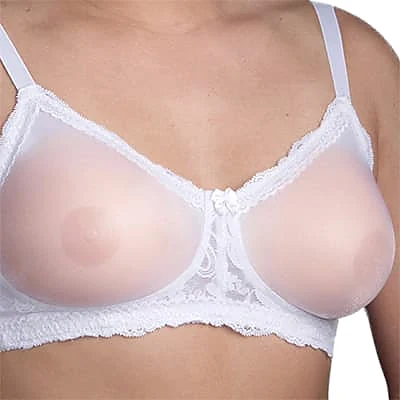
Specialist Pocket Bra
Transparent Pocket Bra
A highly versatile specialist bra designed to hold silicone breast forms securely while allowing the forms themselves to remain part of the visual presentation.
Sophie's Recommendation
Sophie particularly recommends the Transparent Pocket Bra because it works well with the different breast-form styles and provides excellent practical containment without completely hiding the forms.
The transparent construction also adds a little more mystique. You retain the security of a specialist pocket bra while the breast forms remain subtly visible through the bra.
Designed for breast forms Specialist pocket construction helps contain the silicone forms.
Versatile fit A practical choice across the different Translife silicone breast-form styles.
Supportive construction Designed to combine containment with the support needed when wearing breast forms.
Transparent presentation Provides security while retaining a more intriguing, less concealed appearance.
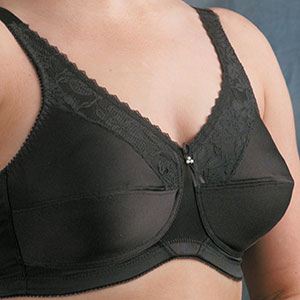
Traditional Lingerie Styling
Satin & Lace Pocket Bra
For those who prefer a more traditional lingerie appearance, the Satin & Lace Pocket Bra combines specialist breast-form pockets with a distinctly feminine satin and lace presentation.
Internal breast-form pockets Designed to hold silicone breast forms securely within the bra.
Fuller coverage A more enclosed bra style can provide reassuring containment around the breast forms.
Supportive design A specialist construction intended for the additional requirements of wearing breast forms.
Classic feminine styling Satin and lace create a more traditional lingerie appearance than the transparent alternative.
You want the practical security of a pocket bra but prefer your breast forms to be concealed within a more conventional-looking piece of feminine lingerie.
Which Pocket Bra?
Choose the Wearing Experience You Prefer
Both bras provide specialist breast-form containment. Your choice can therefore come down to the appearance, coverage and overall experience you want.
Checking a Pocket Bra
Five Things to Check Before You Decide It Fits
Band
The band should remain level and provide the main anchor for the bra.
Form Inside Pocket
The breast form should sit fully inside the pocket without being folded, pinched or excessively compressed.
Cup Shape
The pocket and form together should settle naturally into the available cup space.
Position
Check that both forms sit at a balanced height and position across your chest.
Movement
Walk, sit, bend and raise your arms to confirm that the forms remain comfortably contained.
What a Pocket Cannot Fix
Security and Correct Fit Are Not the Same Thing
A pocket may stop a form from falling out, but that does not necessarily mean the bra fits correctly. Watch for these signs that the underlying form, cup or band combination still needs attention.
Breast form visibly compressed inside the pocket
Pocket fabric stretched excessively around the form
Empty cup space despite the form being contained
Bra band riding upwards during normal movement
One form sitting noticeably higher than the other
Forms still rotating or moving excessively inside the pockets
Do You Have to Wear a Pocket Bra?
No — It Is a Choice, Not a Requirement
Many breast forms can be worn successfully in an ordinary well-fitting bra. A specialist pocket bra becomes particularly attractive when you value greater containment, want reassurance during movement or simply prefer a bra specifically designed around breast-form wear.
There is therefore no need to regard an ordinary bra as wrong and a pocket bra as right. The better choice is the one that gives your breast forms the fit, appearance, comfort and security you want.
Security Is Only Part of the Decision
Pocket bras provide an important specialist option, but bra style also changes coverage, neckline, projection and the way your finished bust looks beneath clothing. Next we look at the different bra styles and what each can offer when worn with breast forms.
Choosing the Right Bra Style
Different Bra Styles Change More Than the Look
Once you understand band fit, cup fit and how your breast forms sit inside the bra, the next decision is style.
Bra style affects coverage, neckline, cup depth, strap position, movement control and the way your finished bust looks beneath clothing. A style that looks beautiful on its own is not automatically the best match for every breast form or every outfit.
The Best Starting Point
Choose the Bra Style Around the Result You Want
Think about the finished effect first. Do you want maximum security, a smoother outline beneath clothing, a lower neckline, more visible cleavage or simply a softer and more flexible fit? The answer helps narrow down the most useful bra styles.
Start With Your Priority
What Do You Want the Bra to Do?
Maximum Coverage
Look first at full-cup and specialist pocket bras.
Smooth Under Clothing
Moulded and T-shirt styles are often a useful starting point.
Lower Neckline
Balconette or plunge styles may suit the outfit better.
Flexible Fit
Soft, seamed or stretch-lace cups can adapt more easily.
Greater Security
Pocket bras remain the specialist option for containment.
Strapless Outfit
Strapless or multiway designs may work, but need careful fit checks.
Full-Cup Bra
A Strong All-Round Choice for Coverage and Containment
Full-cup bras provide more fabric around the breast form, which can make them especially useful when you want a secure, balanced fit and less risk of the form sitting above the cup edge.
They can work particularly well with larger, wider or more projected breast forms, provided the cup itself has the correct width and depth.
Balconette Bra
Lower Coverage With a More Open Upper Bust
Balconette bras usually expose more of the upper part of the breast form and can work well with square, scoop or lower necklines.
Because the cup is lower, the form needs to sit securely and naturally without extending too far above the cup edge. Taller breast forms can therefore be less suited to some balconette constructions.
Plunge Bra
Useful for Deep Necklines — but Less Forgiving
Plunge bras use a lower centre front and can be useful when the clothing neckline drops more deeply between the breasts.
They generally provide less central containment than a fuller bra, so breast-form width, placement and projection become particularly important. Trying to force the forms together simply to create cleavage can compromise both fit and stability.
Moulded or T-Shirt Bra
A Smooth Shape Beneath Fitted Clothing
Moulded cups hold their own shape, which can help produce a smoother and more consistent outline beneath tops and dresses.
The trade-off is that a moulded cup is less willing to adapt to a breast form that does not naturally match its shape. A form that is too wide, too projected or too tall may fight against the moulded cup rather than settle into it.
Soft or Seamed Cup Bra
More Flexible Around Different Breast-Form Shapes
Soft and seamed cups do not rely on one rigid moulded shape. This can make them useful when your breast form needs the bra to adapt around its actual width, projection and profile.
Seams can also influence the final shape of the bust, creating more lift, projection or structure depending on the pattern of the cup.
Stretch-Lace Bra
Useful When You Want a Little More Give in the Cup
Stretch lace can allow the upper cup to adapt more easily to the shape and height of the breast form. This can be helpful where a rigid cup creates minor gaping or pressure.
The amount of stretch varies greatly between bras, so it should be viewed as added flexibility rather than a substitute for choosing the correct cup size.
Longline Bra
Extra Structure Extending Below the Bust
A longline bra extends further down the torso than a standard bra and can provide a more anchored feeling across the chest and upper body.
This style can appeal when you want stronger overall structure, but the longer band must still work comfortably with your ribcage and body shape rather than rolling, restricting movement or sitting unevenly.
Strapless or Multiway Bra
Possible With Breast Forms — but Fit Becomes More Demanding
Strapless and multiway bras can be useful for off-the-shoulder clothing, but they rely much more heavily on the band and cup construction because the shoulder straps are absent or repositioned.
With heavier or more projected breast forms, a strapless style may require considerably more structure to remain secure. Always movement-test the complete combination before relying on it for a longer period.
Specialist Option Already Covered
Pocket Bras Remain the Purpose-Built Choice for Breast-Form Security
The specialist pocket bras covered in the previous section sit alongside these conventional bra styles rather than replacing them. Their defining feature is the internal pocket that helps retain the breast form.
A pocket bra can still have its own cup shape, coverage level and support construction, so the same fitting principles continue to apply.
Do Not Forget the Straps
The Band Anchors the Bra — the Straps Help Position the Cups
Shoulder straps are important, but they should not be used to compensate for a loose band or unsuitable cup.
Do Not Overtighten
Pulling the straps too tightly can lift the cups unnaturally, distort the band and create unnecessary shoulder pressure.
Check Strap Position
A broader chest or shoulders can change where the straps naturally sit. They should remain comfortable and stable rather than constantly slipping outward.
Consider Wider Straps
Wider straps can distribute pressure more comfortably, particularly when wearing larger, heavier or more projected breast forms.
Larger or Heavier Breast Forms
More Weight Usually Benefits From More Stability
There is no rule that says larger breast forms must be worn with one particular bra style. However, as form weight and projection increase, many wearers find that a stable band, adequate cup coverage and more substantial construction make the finished combination easier to manage.
That may mean a full-cup bra, a supportive specialist pocket bra, wider straps or simply a more structured version of the style you already prefer.
Match the Bra to the Clothing
The Best Bra Can Change With the Outfit
You do not need one bra to solve every situation. The bra that works beautifully beneath a high-necked dress may not be the best choice under a deep V-neck top or an off-the-shoulder outfit.
A Simple Decision Process
Fit First — Style Second — Outfit Third
Start with a bra that fits your body and your breast forms correctly. Then decide which style gives you the coverage, security and silhouette you prefer. Finally, check that the bra works beneath the clothing you intend to wear.
Wired, Non-Wired and Pocketed Are Different Decisions
Now that you understand the main bra styles, the next step is looking at construction. We will separate three ideas that are often confused: whether a bra uses an underwire, whether it is non-wired and whether it includes specialist pockets for breast forms.
Understanding Bra Construction
Underwired, Non-Wired and Pocketed Are Different Decisions
It is easy to treat these terms as though they describe three competing types of bra, but they actually refer to different parts of the design.
Underwired and non-wired describe how the bra supports and structures the cups. Pocketed describes whether the bra includes an internal compartment designed to hold a breast form. Understanding that distinction makes it much easier to choose the right construction for your body, breast forms and clothing.
The Key Distinction
Support Construction and Breast-Form Retention Are Separate Features
A bra may be underwired or non-wired, and it may also be pocketed or non-pocketed. One description tells you how the cup is supported; the other tells you how the breast form is contained.
Think of It as Two Questions
First Support — Then Retention
How Is the Cup Supported?
How Is the Breast Form Retained?
Underwired Bras
More Defined Cup Structure and a Firmer Underbust Shape
An underwired bra uses a shaped wire beneath the cup to help define its lower edge and support the cup structure. With breast forms, that can create a more controlled and structured presentation when the wire follows the intended cup shape correctly.
The important point is that the wire should sit around the breast-form area rather than pressing aggressively into the form itself.
More Defined Structure
The wire can help establish the lower boundary and shape of the cup.
Useful With Projected Forms
When properly matched, a structured cup can support a more projected breast-form silhouette effectively.
Fit Matters More
An unsuitable wire width or cup shape can press, distort or displace the breast form.
Important With Silicone Breast Forms
Check the Wire and Cup Interior Before Wearing
The inside of the bra should be smooth and intact. A damaged, exposed or protruding underwire can create unnecessary pressure against the breast form and should not be worn in contact with a silicone form.
If an underwire repeatedly presses into the form, changing the bra size or cup shape is generally more sensible than trying to force the form around the wire.
Non-Wired Bras
Softer Construction With More Flexibility Around the Chest
A non-wired bra shapes and supports the bust without a rigid wire beneath the cup. This can create a softer wearing experience and may suit people who prefer less structure around the ribcage.
Non-wired does not automatically mean unsupported. A stable band, well-designed cups, wider straps and appropriate coverage can still provide very effective support for breast forms.
Softer Feel
No rigid wire beneath the cup can make the bra feel more forgiving around the chest.
Flexible Fit
Some non-wired cups can adapt more easily around different breast-form profiles.
Check Stability
Very soft construction may provide less containment with heavier or highly projected forms.
Pocketed Bras
The Pocket Is About Breast-Form Security — Not Whether the Bra Uses a Wire
A pocket bra includes an internal fabric compartment that holds the breast form. That pocket can be incorporated into either a wired or non-wired bra construction.
This is why it is more accurate to think of pocketing as an additional specialist feature rather than a separate support category.
Structured Support With Added Containment
The wire helps define and support the cup while the internal pocket keeps the breast form contained.
Softer Support With Added Containment
The pocket still provides breast-form security, while the bra relies on band, fabric and cup construction rather than a rigid underwire.
Comparing the Constructions
What Changes — and What Does Not
Which Construction Should You Choose?
Let Comfort, Breast-Form Weight and Your Preferred Silhouette Guide You
Choose More Structure If...
You prefer a strongly defined cup shape, are wearing more projected forms or want a firmer underbust structure.
Choose More Flexibility If...
You prefer a softer feel around the chest or want the cup to adapt more readily around the breast form.
Choose a Pocket If...
You want the additional security of having the breast form physically contained inside the bra.
Larger or Heavier Breast Forms
More Weight Usually Calls for More Thought About Structure
As breast-form weight and projection increase, the band, cup construction and strap design become increasingly important. This does not mean an underwire is compulsory, but a very light or flexible bra may not provide enough stability for the result you want.
A supportive non-wired bra can work very well, just as an underwired bra can fail if the cup shape is wrong. Judge the whole combination rather than the presence or absence of one feature.
What About the Centre Front?
Do Not Judge Breast-Form Fit by One Conventional Bra Rule Alone
In conventional bra fitting, you may hear that the centre gore should always sit completely flat against the chest. With breast forms, the situation can be more nuanced because the forms sit on top of the chest rather than growing from it.
The band should be secure, the cups should contain the forms, the wire should not press dangerously into them, and the finished bust should remain stable and balanced. A small difference at the centre front does not automatically mean the entire combination is wrong.
Test the Construction in Motion
Standing Still Only Tells You Half the Story
Walk
Check whether the forms stay stable inside the cups.
Sit
Make sure the band and wire remain comfortable around the ribcage.
Reach
Raise your arms and check for band movement or form displacement.
Turn
Rotate your torso and look for shifting, pinching or loss of containment.
Wear for a While
Give the combination time to reveal pressure points that are not obvious immediately.
Reconsider the Fit If...
Structure Should Support the Breast Forms — Not Fight Them
Underwire presses directly into the breast form
The wire is exposed, damaged or protruding
The band repeatedly rides upward
The forms are visibly flattened by the cup
The forms move excessively despite strap tightening
The bra feels comfortable only when you remain completely still
The Simple Rule
Choose Support and Security Separately
Decide whether you prefer wired or non-wired support, then decide whether you want the additional containment of a breast-form pocket. Combining those decisions gives you a much clearer route to the bra that works for you.
Now Put the Whole Combination to the Test
The next section brings everything together: band, cups, breast forms, pockets, straps, positioning and movement. We will also diagnose the most common fitting problems and show you what to adjust when something does not look or feel right.
Checking the Finished Fit
Judge the Whole Combination — Not Just the Bra
The final fit depends on your body, the bra, the breast forms, their position and, where relevant, the internal pockets holding them in place.
A bra can look acceptable when you first fasten it and still reveal problems once you move, sit, bend or wear it for longer. This final check is where you bring everything together and decide whether the combination really works.
The Most Useful Rule
Check Fit in Layers
Start with the band, then the cup, then the breast form, then its position, then the straps and finally movement. Working in that order makes it much easier to identify what actually needs changing.
Six-Stage Fit Check
Work From the Foundation Outwards
Band
Secure, level and comfortable around the ribcage.
Cup
Enough width, height and depth for the breast form.
Breast Form
Fully contained without flattening, folding or distortion.
Position
Balanced across the chest and sitting at a believable height.
Straps
Supportive without carrying the entire load.
Movement
Stable when walking, sitting, bending and reaching.
1. Check the Band
The Band Is the Main Anchor
The band should remain level around your body and feel secure without becoming painfully tight. If it rides upwards at the back, much of the stability of the bra is lost.
Band remains level and stable during movement.
Band climbs upwards at the back.
Band size, fastening position and whether straps are overtightened.
2. Check the Cup
The Cup Should Contain the Form Without Fighting It
Look at the whole cup from the front, side and three-quarter view. The breast form should settle naturally into the available space rather than being squeezed into a shape the cup cannot accommodate.
Form follows the cup smoothly with no obvious empty or compressed areas.
Bulging, flattening, gaping or excessive empty space.
Cup width, height, projection and overall volume.
3. Check the Breast-Form Position
A Correctly Sized Bra Can Still Look Wrong if the Forms Sit in the Wrong Place
Position matters. Breast forms placed too high, too low, too close together or too far apart can change the entire silhouette even when the bra itself fits well.
Too High
Can make the bust look unnaturally raised and shorten the visible upper torso.
Too Low
Can create a dropped appearance and reduce upper-bust fullness.
Too Wide
Can make the bust feel disconnected from the centre of the body.
Too Close
Can create forced cleavage and reduce natural chest balance.
Check Both Sides Separately
Small Differences Are Normal — Obvious Imbalance Needs Investigation
Bodies are not perfectly symmetrical, so a slight difference from left to right is not automatically a problem. However, one form sitting substantially higher, further out or more projected than the other usually means positioning, pocket placement or orientation should be checked.
Pocket-Bra Fit Checks
The Pocket Adds Security — but It Adds Another Fit Relationship Too
When you wear a specialist pocket bra, the breast form has to fit inside the pocket and the pocketed form then has to fit correctly inside the bra cup.
Fully Seated
The form should sit completely inside the pocket rather than catching at the opening.
No Bunching
Pocket fabric should lie smoothly rather than folding heavily beneath or around the form.
No Excess Stretch
A pocket being stretched aggressively can indicate that the form is too large for the available space.
No Rotation
The form should remain in its intended orientation during normal movement.
Asymmetrical Breast Forms
Check Left and Right Orientation
Some asymmetrical breast forms are designed specifically for the left or right side. If one form looks unusually angled, sits badly in the pocket or produces a different outline from the other, check that each form is being worn on the correct side.
Symmetrical forms are generally more interchangeable, while handed asymmetrical designs need the correct left/right orientation to create their intended shape.
Check the Straps
Straps Should Fine-Tune the Fit — Not Rescue It
Too Tight
Can pull the cups upwards, distort the band and create shoulder pressure.
Too Loose
Can allow the cups to sit lower and reduce upper-cup stability.
Too Far Out
Broader shoulders or chest width can affect strap position and cause slipping.
Uneven Adjustment
Different strap lengths can unintentionally make one form sit higher than the other.
Movement Test
Do More Than Stand in Front of the Mirror
A combination that works while standing still should also remain comfortable and secure during the movements you are likely to make in real life.
Walk
Check for bouncing, sliding or rotation.
Sit
Notice any band, cup or wire pressure.
Bend
Make sure the forms remain contained.
Reach
Check whether the band rides or the cups lift.
Turn
Look for twisting or uneven form movement.
The 15–30 Minute Test
Give the Fit Time to Reveal Itself
If practical, wear the complete bra and breast-form combination for fifteen to thirty minutes before deciding that the fit is right. Pressure points, slipping straps, pocket movement or excessive tightness are often much easier to identify after a little time than they are immediately after fastening the bra.
Common Problems and What to Check
Change One Variable at a Time
If something is wrong, resist the temptation to change the band, cup, straps and breast-form position all at once. Identify the symptom, make one adjustment and check again.
Check for an overly loose band or overtight straps.
Try a wider cup or reassess form width.
Look for more projection or cup volume.
Check whether the cup is too tall or the form is sitting too low.
Try a smaller cup or reassess breast-form volume.
Reposition both forms and check strap lengths.
Remove and reseat the form smoothly.
Check pocket compatibility and left/right orientation.
Check the foundation fit before tightening straps.
Reposition or choose a construction with more suitable strap placement.
Do not accept pain as necessary support; reassess the band.
Stop forcing the combination and try a better-matched construction.
Look From More Than One Angle
Front, Side and Three-Quarter Views Tell Different Stories
From the front, check width, spacing and symmetry. From the side, check projection and whether the breast form is being flattened or pushed upward. From a three-quarter angle, check whether the transition from chest to bust looks balanced and natural beneath the bra.
The Final Question
Does the Silhouette Look Right for You?
Correct fitting is not simply about passing technical checks. The final bust should work with your shoulders, chest, waist, clothing and the overall feminine silhouette you are trying to create.
If everything feels secure and comfortable but the result still looks too large, too small, too wide or too projected, the issue may be the breast-form choice rather than the bra.
Best Practice
Diagnose the Symptom Before Changing the Solution
A poor result does not automatically mean you need a different bra size. It may be the breast-form dimensions, cup shape, positioning, pocket compatibility, strap placement or simply the way the complete combination is sitting on your body. Change one thing at a time and judge the result again.
Bring the Whole Guide Together
The final section answers the practical questions that often come up when choosing and wearing a bra with breast forms, then summarises the fitting process into a simple sequence you can return to whenever you need it.
Bra & Breast Form FAQ
Common Questions About Wearing Bras With Breast Forms
Choosing a bra for breast forms becomes much easier once you stop treating the cup size label as the whole answer.
The questions below bring together the main fitting principles from this guide — body measurements, band fit, breast-form size and shape, cup construction, pocket bras, positioning and the final silhouette.
Do I Need a Special Bra to Wear Breast Forms?
Not necessarily. Many breast forms can be worn successfully inside an ordinary well-fitting bra.
A specialist pocket bra adds an internal compartment that contains the breast form and can provide additional security, particularly if you are concerned about movement, rotation or wearing the forms for longer periods.
Is a Pocket Bra Better Than an Ordinary Bra?
It depends on what you want from the bra. A pocket bra is specifically designed to contain the breast form, so it can offer greater reassurance and stability.
An ordinary bra may still be an excellent choice when the band, cup and breast-form dimensions work well together. Neither option is automatically correct for everyone.
Translife Specialist Option
Which Pocket Bra Does Sophie Recommend?
Sophie particularly recommends the Translife Transparent Pocket Bra because it works well with the different silicone breast-form styles while providing secure containment.
Its transparent construction also allows more of the breast form to remain visible, adding a little extra mystique while retaining the practical benefits of a specialist pocket bra.
View the Transparent Pocket BraWhat if I Prefer a More Traditional Lingerie Look?
The Translife Satin & Lace Pocket Bra provides the security of internal breast-form pockets with a fuller, more traditional lingerie appearance.
It can be a good alternative if you prefer your breast forms to be more concealed within the bra while retaining specialist pocket construction.
View the Satin & Lace Pocket BraHow Do I Know Which Cup Size I Need With Breast Forms?
Start with your correct band measurement, then judge the actual breast form inside the cup.
The form needs enough room for its width, height, projection and overall volume. A labelled cup size is useful, but it should never be treated as the only measure of whether the breast form fits correctly.
Should I Choose the Breast Form or the Bra First?
In most cases it is easier to choose the breast-form size and silhouette you want first, then find the bra that accommodates that form correctly.
If you already own a favourite bra, you can work in the opposite direction, but the breast-form dimensions still need to be compatible with the available cup space.
Can the Same Bra Size Fit Different Breast-Form Shapes?
Sometimes, but not always. Two breast forms can have a similar overall volume and distribute that volume very differently.
One may be wider and shallower while another may be narrower and more projected. That can change how well each form works inside the same bra cup.
Do Left and Right Breast Forms Matter?
They do with handed asymmetrical breast forms. These are designed so one form is worn on the left and the other on the right.
If an asymmetrical form looks oddly angled, rotates inside the pocket or gives a noticeably different outline on one side, check that the forms have not been swapped.
Is an Underwired Bra Better for Breast Forms?
Not automatically. Underwires can provide a more defined cup structure, while non-wired bras can offer a softer and more flexible fit.
What matters is whether the complete bra supports the breast forms securely without painful pressure, distortion or an exposed wire contacting the silicone form.
Can a Pocket Bra Be Underwired?
Yes. Pocketed and underwired describe different features. The pocket is used to retain the breast form, while an underwire is part of the cup-support construction.
A pocket bra can therefore be underwired or non-wired.
How Tight Should My Bra Be?
The band should be firm enough to stay level and provide a stable anchor, but it should not be painfully tight or restrict normal breathing and movement.
Tightening the straps excessively is not a substitute for correct band fit.
Why Does My Bra Size Change Between Brands?
Bra sizing is not perfectly standardised between brands and styles. Cup shape, fabric stretch, wire width, construction and grading can all affect the finished fit.
Treat the size label as your starting point and judge the actual fit on your body with your breast forms in place.
Why Do My Breast Forms Move When I Walk?
Movement can come from a loose band, unsuitable cup shape, insufficient containment, incorrect form positioning or a pocket that does not hold the form closely enough.
Check the foundation fit before simply tightening the shoulder straps.
Why Is There Empty Space at the Top of the Cup?
The cup may be too tall, the breast form may be sitting too low, or the cup shape may simply not match the form's upper profile.
Do not immediately assume that you need a smaller cup. Check positioning and cup shape first.
Why Does My Breast Form Look Flattened?
The cup may not provide enough depth or projection for the form. It may also be too small overall or have a moulded shape that conflicts with the form.
A larger cup is one possible solution, but sometimes a differently shaped cup is the better answer.
Should I Try to Push My Breast Forms Together for Cleavage?
You can adjust positioning to create the look you prefer, but forcing forms unnaturally close together can create pressure, instability and an artificial-looking result.
A more convincing silhouette usually comes from balancing form width, bra style, chest width and clothing rather than chasing cleavage alone.
More About Pocket Bras
Inserting, Positioning and Securing Breast Forms Deserves Its Own Guide
This guide has covered how pocket bras affect bra selection and fit. The separate Pocket Bras & Secure Fit Guide will go further into inserting breast forms, positioning them correctly, left/right orientation, movement control and everyday security.
Guide Summary
Choosing a Bra for Breast Forms in Seven Steps
You do not need to memorise every detail in this guide. Follow this sequence and you will avoid most of the common fitting mistakes.
Measure Your Band
Begin with the ribcage measurement and use the relevant brand or retailer sizing guidance.
Choose Your Breast-Form Effect
Decide the bust size, width and projection that work with your body and desired silhouette.
Match the Form to the Cup
Judge width, height, depth, shape and volume rather than relying on the cup letter alone.
Choose Your Retention
Decide whether an ordinary bra provides enough security or whether you prefer a specialist pocket bra.
Choose the Bra Style
Consider coverage, neckline, clothing, structure and the finished appearance you want.
Position and Adjust
Balance the forms across the chest, check straps and make sure pocketed forms are fully seated.
Movement-Test the Result
Walk, sit, bend, reach and wear the combination long enough to reveal any pressure or movement problems.
The Most Important Thing to Remember
The Number on the Label Is Only the Starting Point
A successful bra and breast-form combination comes from the way your body, the breast forms and the bra work together. Band size, cup size, form shape, projection, bra style, pocket construction and positioning all influence the finished result.
When the combination feels comfortable, remains secure during normal movement and creates the feminine silhouette you want, you have found the fit that matters.
Choosing the Correct Bra for Breast Forms
Guide Complete